India's air cargo sector has grown at double-digit rates at privately operated airports in recent reporting periods. A significant share of this growth is moving away from traditional coastal hubs toward inland locations with stronger geographic reach and multimodal infrastructure. Nagpur is at the centre of this shift.
A combination of many geographic, infrastructure, and institutional factors position Nagpur as a logistics and cargo gateway for Central India.
Nagpur's Geographic Advantage: The "Zero Mile" of India
If a straight line is drawn from Delhi to Chennai on the map of India, and another from Kolkata to Mumbai, the two lines intersect at a point close to Nagpur.
The city is also home to the Zero Mile Stone, a marker established in 1907 by the British Great Trigonometrical Survey to serve as a reference point for distance measurements across the country.
Nagpur’s central location means that passengers and cargo can move between Nagpur and major Indian cities such as Mumbai, Delhi, Bengaluru, Hyderabad, Chennai, Kolkata in approximately two hours by flight.
Consignments dispatched from Nagpur by road can reach destinations across seven national highway corridors within 48 hours.
Nagpur's central location relative to other hubs in India is the advantage that led to the creation of MIHAN — a dedicated multimodal cargo and logistics precinct built around the city's airport.
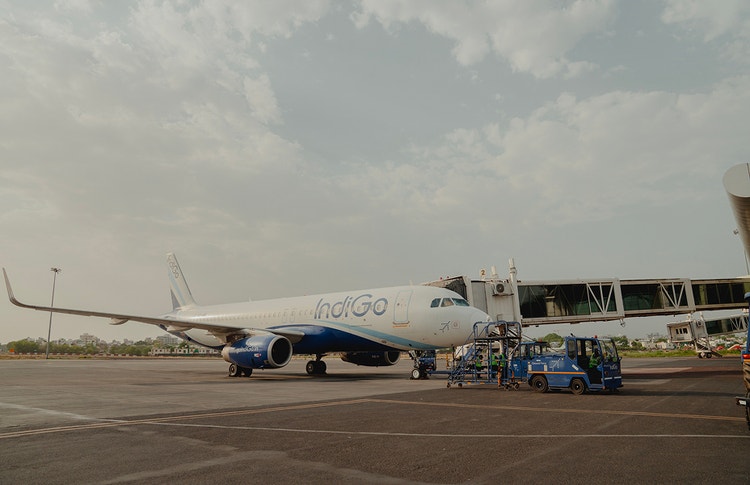
What Is MIHAN? Nagpur's Integrated Cargo and Logistics Infrastructure
MIHAN stands for the Multi-modal International Cargo Hub and Airport at Nagpur.
It is an infrastructure project built to develop an integrated air-rail-road logistics ecosystem around Dr. Babasaheb Ambedkar International Airport in Nagpur.
The planning and development of MIHAN is led by the Maharashtra Airport Development Company (MADC), a Special Purpose Vehicle established by the Government of Maharashtra.
The airport within the MIHAN precinct is managed by MIHAN India Limited (MIL), a joint venture formed in 2009 between the Airports Authority of India (49%) and MADC (51%).
Multimodal Connectivity at Nagpur: How Air, Rail, and Road Cargo Infrastructure Works Together
The MIHAN precinct brings Nagpur's air cargo terminal, rail-linked dry port, and road terminal into one area.
Air Cargo
Dr. Babasaheb Ambedkar International Airport currently handles approximately 150 metric tonnes of cargo per day. In FY 2024–25, annual cargo stood at 9,018 MT, a 12.8% year-on-year increase. Under GMR Aero's Phase 1 redevelopment (explained in detail in the GMR roadmap section below), a new Nagpur airport cargo terminal with 20,000 MT annual capacity is being built. The long-term master plan targets air cargo throughput of up to 300,000 MT per year at full saturation.
Rail Connectivity
Nagpur's rail infrastructure connects the MIHAN cargo hub to India's seaports and industrial centres through three infrastructural elements.
- A CONCOR-operated rail terminal within the MIHAN precinct handles containerised cargo.
- The Multi-Modal Logistics Park (MMLP) at Sindi, near Wardha, began commercial operations in April 2025 as a dry port managed jointly by NHLML and JNPA under the Gati Shakti framework.
Road Connectivity
Nagpur's road connectivity to India's largest container port improved significantly when the Samruddhi Mahamarg (Mumbai–Nagpur Expressway) cut transit time between the two cities from 14–16 hours to approximately 8 hours. The expressway provides MIHAN with a direct high-speed road link to JNPT in Mumbai.
The MIHAN precinct itself has 51 km of internal roads and two flyovers connecting to NH-44. A road terminal within the precinct provides warehousing and stockyard facilities and can accommodate up to 1,000 trucks.
GMR Aero's Redevelopment Roadmap for Nagpur Airport
GMR Aero (GMR Airports Limited) took over operations of Dr. Babasaheb Ambedkar International Airport in June 2026. GMR Aero is redeveloping the airport in three phases.
Phase 1 (Years 1–4): New Terminal, Cargo Hub, and Ground Infrastructure
In Phase 1, GMR Aero will:
- Build a new integrated passenger terminal with a capacity of 4 million passengers per year.
- Build a 20,000 MT annual-capacity cargo terminal with dedicated domestic and international handling zones.
- Build new access roads, expand vehicle parking, upgrade airside facilities, and develop on-site hotel infrastructure.
- Refurbish the existing Terminal 1 and its associated facilities.
Phase 2 (Years 5–8): New Runway and Air Traffic Control Tower
In Phase 2, GMR Aero will build:
- A new parallel runway proposed at 4,000 metres, which will allow the airport to handle wide-body and heavy freighter aircraft that the current single-runway setup cannot accommodate.
- A new Air Traffic Control (ATC) tower to handle higher flight volumes safely.
- A second runway and wide-body aircraft capability matter directly for cargo.
Phase 3 (Beyond Year 8): How Passenger and Cargo Capacity Will Scale Further
In Phase 3, GMR Aero will scale the airport toward 30 million passengers annually. Cargo infrastructure will grow alongside, toward the master plan's 150,000 MT annual saturation capacity. GMR Aero will add capacity in modules as traffic volumes grow, rather than building everything upfront.
What Nagpur's Cargo Infrastructure Means for Logistics Operators, Exporters, and Manufacturers
3PLs, exporters, importers, and manufacturers evaluating Nagpur for warehousing and distribution can benefit from the following.
- A manufacturer that ships finished components by air and receives raw materials by rail can do both within the MIHAN precinct.
- Distributors based at Nagpur can deliver shipments to all major Indian cities within hours by air, or to destinations across seven national highway corridors within 48 hours by road.
- E-commerce fulfilment centres, pharmaceutical distributors, and express cargo operators at Nagpur can offer same-day or next-day delivery to most of India.
- Exporters and importers can access JNPT, India's largest container port, via the Samruddhi Mahamarg in approximately 8 hours by road and via the Sindi MMLP dry port by rail.
Industries and Investment at the MIHAN SEZ: Aerospace, IT, MRO, and Manufacturing
The MIHAN SEZ spans 2,086 hectares and is the largest multi-product Special Economic Zone in India. The following industries have a strong operational footprint within the zone.
Aerospace and Defence
Boeing invested $100 million to set up a regional aircraft service and maintenance facility at MIHAN.
The Tata Advanced Systems Limited (TASL) facility at MIHAN in Nagpur manufactures aircraft floor beams and holds a total of 60-acres of land in MIHAN.
Dassault Reliance Aviation Limited (DRAL), a joint venture between Dassault Aviation and Reliance Group, manufactures nose cones and other components for Falcon business jets at the SEZ.
Information Technology
TCS, HCL Technologies, and Hexaware have started operations within the zone and are currently expanding.
Infosys and Tech Mahindra are constructing large campuses at the SEZ.
MRO (Maintenance, Repair, and Overhaul)
Air India operates a 50-acre MRO facility at MIHAN for wide-body aircraft including the Boeing 777.
AAR Indamer has built an additional MRO facility next to it.
Healthcare
Multi-specialty institutions including AIIMS Nagpur are being built at a dedicated 60-hectare Health City zone within MIHAN.
Manufacturing and Agro-processing
Pharmaceutical manufacturer Lupin has been operational in the zone for several years.
Agro-processing units, including a Patanjali Food Park, are also present.
Economic Impact: Jobs, Trade, and Institutional Growth in the Vidarbha Region
MIHAN's industrial and logistics activity has generated employment, trade growth, and institutional development across the Vidarbha region.
- Over 30,000 people currently work within the MIHAN precinct, in IT, aerospace, logistics, and MRO operations.
- Long-term projections from the Maharashtra Airport Development Company (MADC) estimate the project will generate employment for approximately 4.5 lakh people in the Nagpur region.
- Forty-three new engineering colleges have been sanctioned in the vicinity to build the workforce pipeline for this industrial base.
- The Central Warehousing Corporation (CWC) has partnered with MADC on a logistics hub at MIHAN.
MADC and GMR Aero's phased expansion is planned to continue this over the next decade.
Nagpur vs Other Regional Cargo Hubs: How Geography and Multimodal Infrastructure Compare
Several Indian airports and logistics precincts handle large cargo volumes in specialised categories.
Bengaluru leads in perishable-goods handling.
Hyderabad dominates pharmaceutical logistics.
Indore serves Madhya Pradesh's industrial belt.
Nagpur’s cargo infrastructure serves pan-India distribution from a central geographic position, with air, rail, and road infrastructure co-located within a single precinct.
| Feature | Nagpur (NAG) | Bengaluru (BLR) | Hyderabad (HYD) |
| Primary cargo identity | Manufacturing, MRO, and multimodal transit hub | India's leading perishable cargo hub | Pharmaceutical and vaccine logistics gateway |
| Geographic positioning | Centre of India (Zero Mile) — equidistant reach to all major metros | Southern India gateway | South-Central India gateway |
| Cargo milestone | 9,018 MT in FY 2024–25; GMR Aero Phase 1 target: 20,000 MT | 500,000+ MT in FY 2024–25 | 72% of total cargo is pharma |
| Multimodal integration | Airport + SEZ + CONCOR rail terminal + road terminal within MIHAN | Digital Cargo Community System + planned metro/suburban rail | Integrated Cargo Complex (domestic + international under one roof) |
| SEZ / industrial base | 2,086-hectare multi-product SEZ (Boeing, TCS, Infosys, MRO) | Airport-adjacent tech and logistics clusters | 1,500-acre GMR Aerocity ecosystem |
The Road Ahead for MIHAN and Nagpur Airport
The MIHAN precinct's air, rail, and road infrastructure is operational.
GMR Aero's three-phase redevelopment of Dr. Babasaheb Ambedkar International Airport is underway.
The SEZ doubled its exports to ₹39.6 billion in FY 2024–25.
The Samruddhi Mahamarg has cut road transit to JNPT to 8 hours.
As each phase of the redevelopment is completed, Nagpur's capacity to serve as Central India's logistics and cargo gateway will grow in step.
Frequently Asked Questions
Does Nagpur airport handle international cargo?
Nagpur airport has direct international passenger flights, including to the Middle East. MIHAN's cargo infrastructure is being developed to handle international freight alongside domestic cargo.
What is the Multi-Modal Logistics Park (MMLP) at Sindi?
The Sindi MMLP, near Wardha, began commercial operations in April 2025. NHLML and JNPA jointly manage it under the Gati Shakti framework. Businesses based at Nagpur can clear cargo at this inland facility instead of sending shipments to a coastal port for customs processing.
How many people work at MIHAN?
Over 30,000 people currently work within the MIHAN precinct across IT, aerospace, logistics, and MRO operations. MADC's long-term projections estimate the project will generate employment for approximately 4.5 lakh people in the Nagpur region.
What is the Samruddhi Mahamarg, and how does it affect cargo movement?
The Samruddhi Mahamarg is the Mumbai–Nagpur Expressway. It has cut road transit time between the two cities from 14–16 hours to approximately 8 hours, and has given MIHAN a direct high-speed road link to JNPT, India's largest container port.
How did MIHAN SEZ exports perform in FY 2024–25?
Total MIHAN SEZ exports more than doubled to ₹39.6 billion in FY 2024–25. Aircraft component manufacturing contributed ₹5.8 billion of that total.
What role does MADC play in the MIHAN project?
The Maharashtra Airport Development Company (MADC) is a Special Purpose Vehicle established by the Government of Maharashtra. MADC is the Special Planning Authority for the entire MIHAN area and leads land acquisition, infrastructure development, and utility provision across the precinct.
How is MIHAN India Limited (MIL) structured?
MIHAN India Limited is a joint venture between the Airports Authority of India (49%) and MADC (51%), formed in 2009. MIL holds the airport concession and signed a 30-year agreement with GMR Nagpur International Airport Limited in October 2024 for the airport's modernisation and operation.
What MRO facilities exist at MIHAN?
Air India operates a 50-acre MRO facility at MIHAN — Asia's second-largest air maintenance workshop — for wide-body aircraft including the Boeing 777. AAR Indamer operates an additional facility next to it.
What industries operate at the MIHAN SEZ?
Aerospace manufacturers (Boeing, Tata Advanced Systems, DRAL), IT firms (TCS, HCL, Infosys, Tech Mahindra), MRO operators (Air India, AAR Indamer), healthcare institutions (AIIMS, National Cancer Institute), pharmaceutical companies (Lupin), and agro-processing units (Patanjali Food Park) all operate within the zone.
Where can businesses get official information about MIHAN?
Official information on tenders, SEZ investment, cargo infrastructure, and land availability is published by MIHAN India Limited (mihanindia.in) and the Maharashtra Airport Development Company (madcindia.org).